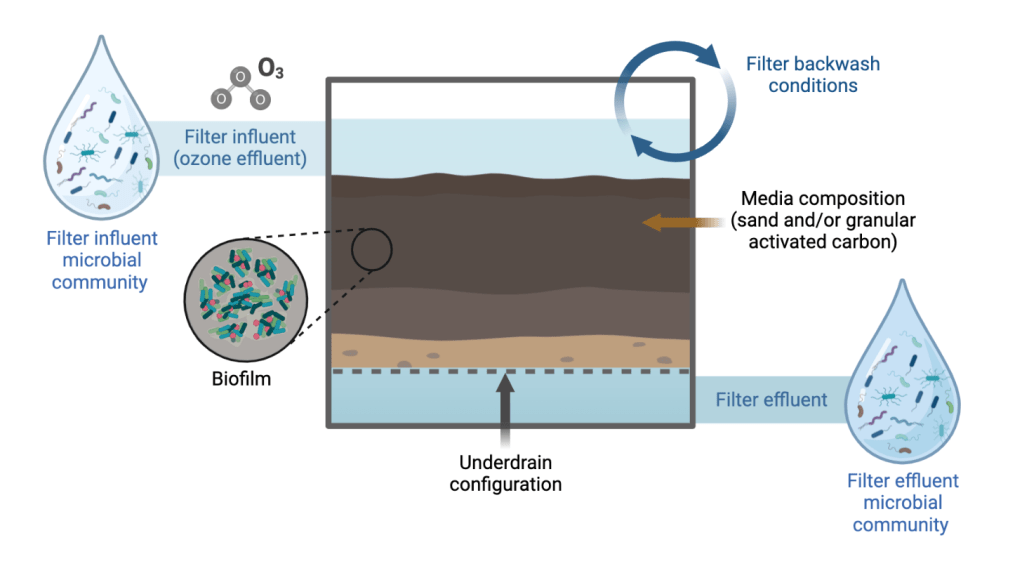
Project Summary: Biofiltration is a water treatment process that uses naturally occurring microorganisms to remove impurities from water and is often used in combination with other treatment processes, such as disinfection, to provide a multi-barrier approach to drinking water treatment. The City of Ann Arbor drinking water treatment plant (AA-WTP) uses ozone disinfection, biofiltration and chloramination to treat drinking water. The AA-WTP replaces the granular activated carbon (GAC) in their biofilters frequently (every two to three years) due to the discovery of per- and polyfluoroalkyl substances (PFAS) contamination in their source water. This frequent GAC replacement was expected to impact biofilter microbial communities. Our research aims to determine the impact and unintended consequences of this more frequent GAC replacement on the acclimation of the microbial community and nitrifier populations.
A second study related to biofiltration involves investigate the role of biofiltration in shaping the microbial community in the distribution system, with specific focus on nitrifying bacteria. Previous studies have indicated that drinking water treatment, especially biofiltration, plays an important role in shaping the microbial community of the distribution system. Elevated nitrite concentrations have been observed in some filter effluents after GAC replacement as well as in select distribution system sites. By fully understanding nitrifier population dynamics through various treatment strategies, we aim to determine if nitrification in the DS could be controlled at the treatment plant.
Group members: Sarah Potgieter
Collaborators: The City of Ann Arbor drinking water treatment plant
Funding Source: Blue Sky Initiative
Relevant publications:
 Raskin Research Group